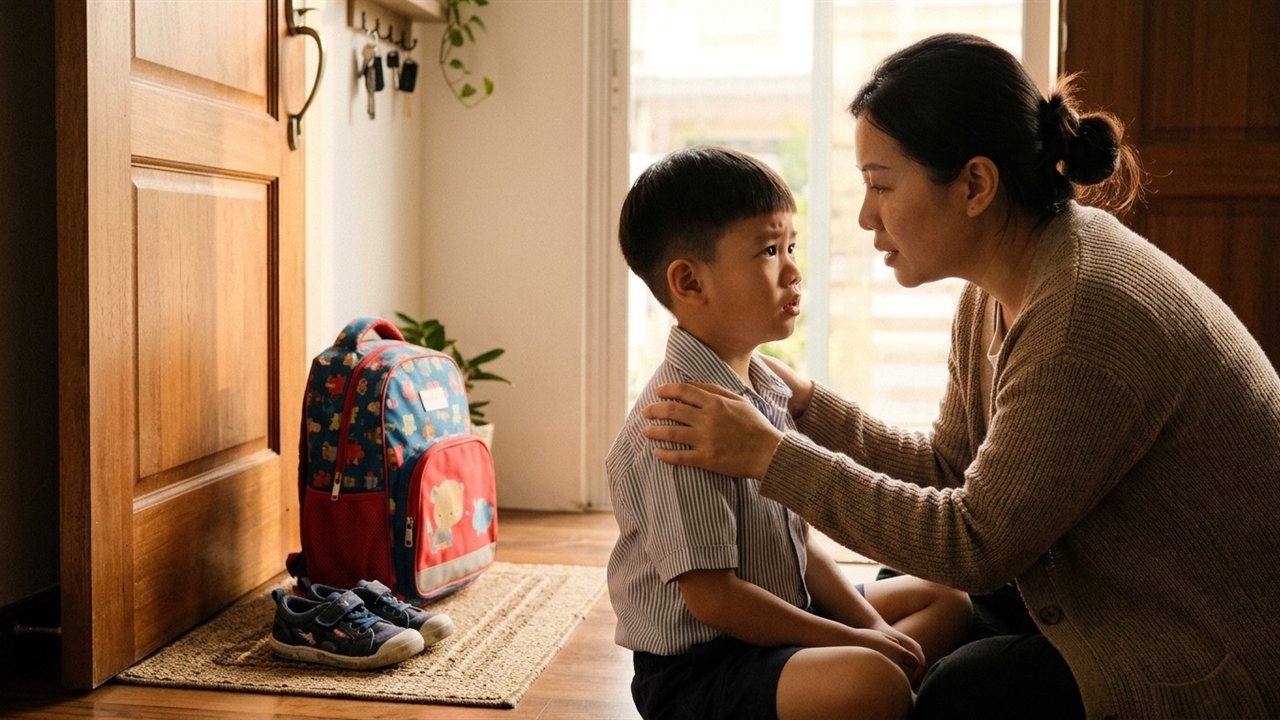
Most kids don't want to go to school sometimes — maybe there's a test they're dreading, a fight with a friend, or just a rough morning. But if your child refuses to go to school over and over, gets really upset at the thought of going, or keeps complaining of stomachaches or headaches on school days, it might be more than just "not wanting to go." This is often called school refusal.
As a child psychiatrist, I see this a lot — and it's often misunderstood by both parents and teachers. This article explains what's really going on, and how you can help your child.
What Is School Refusal?
School refusal is when a child has ongoing trouble going to school because of anxiety or emotional distress — not because they don't care about school. It's quite different from truancy (skipping school on purpose):
- School refusal — the child feels anxious or scared about school, usually still wants to do well, and parents know exactly what's happening
- Truancy — the child skips school on purpose, often without the parents knowing, and it's usually not about anxiety
School refusal is almost always rooted in anxiety. Treating it like a discipline issue — instead of an emotional one — usually makes things worse, not better.
Common Reasons Kids Refuse School
School refusal isn't a diagnosis by itself — it's usually a sign of something else going on:
- Separation anxiety — especially in younger kids, not wanting to be away from a parent
- Social anxiety — fear of being laughed at, embarrassed, or judged by classmates
- Bullying — ongoing conflict with other kids that hasn't been talked about
- Pressure to perform well — intense fear of failing or falling behind
- Anxiety or low mood that goes beyond just school
- A specific event — a recent illness, a change at home, or something scary that happened at school
Signs of School Refusal to Watch For
- Stomachaches, headaches, or feeling sick on school mornings — that go away once they stay home
- Lots of crying, tantrums, or begging to stay home
- Struggling to get out of bed or get dressed on school days
- Suddenly seeming much happier once it's decided they'll stay home
- The avoidance getting worse over a few weeks, not better
What Parents Can Do to Help
- Stay calm and ask questions — find out exactly what feels hard about school, without judging
- Talk to the school — teachers and counsellors often notice things you can't see from home
- Avoid letting them stay home completely — the longer they're away, the harder it becomes to go back; a slow, supported return usually works better than forcing it all at once
- Acknowledge the feeling, not the avoidance — "I know this feels really hard" is very different from "okay, you don't have to go"
- Get help early — especially if it's been going on for more than a couple of weeks, or getting worse
When Should You Get Help?
If school refusal has lasted more than two weeks, keeps getting worse, or comes with other signs of anxiety or low mood, it's worth booking a proper assessment. Getting help early usually makes a big difference — both for how your child feels, and for their long-term relationship with school.
Is your child struggling to go to school?
Dr. Wong offers thorough, caring assessments for children and teens at Island Mind Specialist Clinic in Georgetown, Penang.
Book an appointment