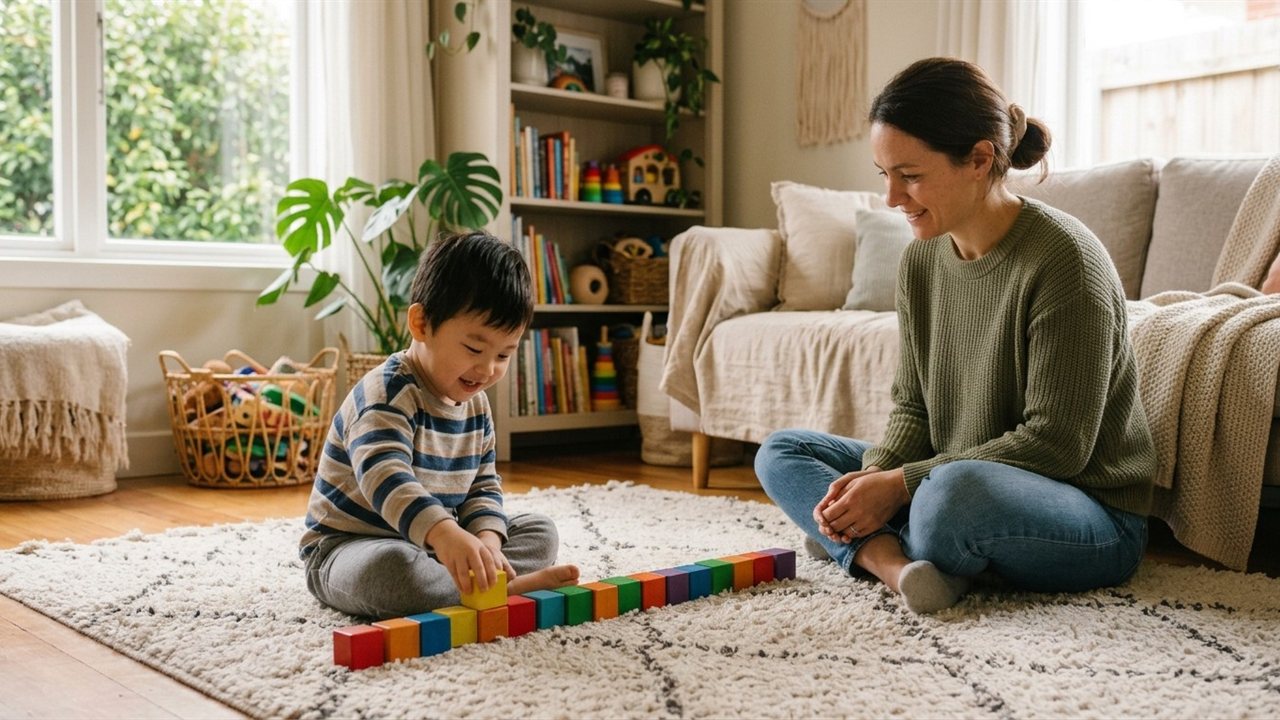
Every child develops a little differently — some talk early, some talk late, some are shy, some are outgoing. But if your child avoids eye contact, doesn't respond to their name, has trouble with back-and-forth communication, or does the same thing over and over, you might be wondering: could this be autism?
As a child psychiatrist, I know how confusing and worrying this can feel for parents. This article walks you through the real early signs of autism, how a diagnosis actually works, and what support can look like.
What Is Autism?
Autism (or Autism Spectrum Disorder) is a condition that affects how a person communicates, interacts with others, and experiences the world around them. It's called a "spectrum" because it looks different in every child — some children need a lot of support, others need very little. Autism isn't caused by parenting, and it isn't something a child will "grow out of." With the right support, autistic children can thrive and lead full, happy lives.
Early Signs of Autism in Children
Signs can often be noticed from as early as 12–24 months old, though every child is different. Here's what to look out for.
Social & Communication Signs
- Doesn't respond to their name being called
- Avoids eye contact, or makes very little eye contact
- Doesn't point at things to show interest (like pointing at a plane in the sky)
- Prefers to play alone rather than with other children
- Doesn't share enjoyment with others, like showing you a toy just because they're excited
- Delayed speech, or loses words they used to say
- Talks "at" people rather than having a back-and-forth conversation
- Takes things very literally, and struggles to understand jokes or sarcasm
Behaviour & Routine Signs
- Does the same movement over and over, like hand-flapping, rocking, or spinning
- Lines up toys or objects instead of playing with them normally
- Gets very upset by small changes in routine
- Has an intense, narrow interest in a specific topic
- Very sensitive to sounds, lights, textures, or smells — or seems not to notice pain
- Only eats a very limited range of foods
Autism vs. Asperger's: What's the Difference?
"Asperger's" used to be diagnosed as a separate, milder condition, usually in children with no speech delay and average or above-average intelligence. Today, it's considered part of the autism spectrum rather than a separate diagnosis — but many people (and some older reports) still use the term, so you may still come across it.
Why Early Support Matters
The earlier autism is recognised, the sooner a child can get support that's actually built around how they learn and communicate best. Early support — whether speech therapy, occupational therapy, or a structured learning plan — tends to make a real, lasting difference in how a child copes at school and in daily life.
How Is Autism Diagnosed?
There's no blood test or scan for autism. A proper diagnosis usually involves:
- A detailed conversation about your child's development, from early milestones to current behaviour
- Direct observation of how your child communicates, plays, and interacts
- Input from parents and teachers, since behaviour can look different across settings
- Ruling out other causes — such as hearing problems or speech delays alone
- A proper evaluation by a psychiatrist experienced in child development
When Should You See a Doctor?
If you've noticed several of these signs in your child, especially if they're not improving or a teacher has raised similar concerns, it's worth getting a proper assessment. You know your child best — if something feels off, trust that instinct and get it checked. Getting an assessment doesn't commit you to anything; it simply gives you answers and a clear path forward.
Wondering if your child might be autistic?
Dr. Wong offers thorough, caring assessments for children and teens at Island Mind Specialist Clinic in Georgetown, Penang. See how the autism assessment works.
Book an appointment